Are you suffering from anxiety about working with a contractor?
Are you afraid of giant overages?
Will the finished home actually be YOURS, or will the contractor have robbed you of your dream by going over budget and making decisions without you.

Here are 10 tips on how to make your experience the best it can be.

1. Make sure you are working with an honest contractor.

“You cannot make a good deal with a bad person.” (Zig Ziglar). No matter how good the sales pitch sounds, make sure your contractor is honest. It may sound like a scare tactic, but it is a simple hard fact that contractors can take advantage of a large, detailed purchase such as a home, not to mention simply taking your money and running.

2. Make sure your contractor is a good communicator.

Many HONEST contractors have surprised their clients with extra costs at the end of the project simply because they didn’t communicate what a change would cost. You don’t want to be told “You’re doing fine.” and then have extra cost at the end. Get specifics. Along with communicating well with you, a contractor needs to be a good listener. In the end, you want the house to be YOUR home. Make sure your contractor is a good listener.

3. Make sure your contractor is organized.

An organized contractor is more likely to have accurate cost information when you ask for it, and is prepared to help you make decisions on time. The best contractors have master lists of all the decisions that need to be made so you can simply work down the checklist.

4. Make sure your contractor is experienced.

Does your contractor know HOW to build. How long has their company been in business. Are their subcontractors experienced? Experienced contractors can deliver a better product, and if they are honest and organized, they can deliver it on time and on budget.

5. Understand that your contractor has to make a fair living.

Construction work of any sort is tough work. No contractor can afford to lose money, even honest, clear communicating, organized contractors. It is not in your best interest for them to feel they are donating parts of the home to your worthy cause. Contractors who are able to make a fair living will be more likely to put that “something extra” into your project, less likely to cut corners, and more likely to take care of you when service is needed after the sale.

6. Be organized yourself.

Have decisions made well in advance of each stage of the construction process. A decision about grout color seems like a small thing, but consider this. Special colors have to be ordered in advance. If the subcontractor is scheduled to start monday, and finds out too late that the grout color is going to be different, he may have to wait several days for it to be delivered. Since he was ready to start, he may have his crew already loaded for or on the job. He also may not have his next job prepared. Your lack of preparedness may have cost him the opportunity to make a fair living on this day, or it may have caused your price to increase because of the money he spent doing nothing. Even if you have a set price on his work, it is in your best interest to work with contractors in a way that they can make a fair living. If they begin to feel pinched cost-wise, they will be tempted to cut corners, and will certainly become less willing to put that “something extra” into your project. Being organized=helping your contractor complete your project on time and make a fair living=a better built product that everyone is proud of in the end.

7. Choose Honest Allowances.

There is something intrinsically flawed about developing a plan for a wellbuilt, stylish home with all your personalized creature comforts, and then putting the plan out to bid with multiple contractors. Each contractor wants the project, and so they will bid in $3 per square foot for floor covering, $50 per light fixture, etc. In the end, you will be forced to sacrifice what you really want, or go over every allowance in order to get the quality features that make the house become YOUR HOME. If you have a set budget, and most of us do, you have to choose between “MORE HOUSE, LESSER FINISH and LESS HOUSE, BETTER FINISH. A classic example of this is the allowance for seeding the lawn. Most contractors will price the allowance at 7 cents per square foot, ($1,000 for an average 14,000 square foot lawn). They don’t want to lose the project because of a seeding allowance that is 50% higher than their competitor’s. However, this price can only purchase a lawn that is high in fast-germinating perennial ryegrass, which will forever struggle with funguses and other problems. And it will never get the deep blue-green look that a 10 cents per square foot Kentucky Bluegrass Lawn will achieve.

8. Protect Your Investment!

If you own a wooded lot, you need to be aware that many people will pay extra for the wooded lot and then pay for the removal of dead trees for the next five years after construction. This is because proper protections are not in place during the construction process. Trees are extremely sensitive to compaction of the soil, as well as to changing of the soil level in their root zone. In most cases, simply calling in an expert to rope off the root zones to construction traffic and fill can protect the look you loved enough to purchase. For a free copy of our information sheet “5 tips to preserve your wooded lot” call 260-627-8342.

9. Inspect the Project Yourself.

Be proactive. Build time into your schedule to stop by the project on a regular basis (daily or every other day) during times when the construction is active, even if it means giving up evening activities during the time of your construction. You will be the first to notice if a wall is in the wrong place, if a window got missed, or if they didn’t wire properly for your double oven. In addition to catching mistakes, you can make sure that the project is staying on schedule. The squeaky wheel gets the oil. This is true. And you can be a squeaky wheel without being a jerk by simply asking “Where is the drywall crew today. You had said they would be here today. When should I really expect them.” Even Honest, Communicating, Organized, and Experienced contractors will miss details and fall behind schedule. When mistakes are caught early, and the project stays on schedule, it is cheaper for everyone involved and the result is more satisfying.

10. Save something for those finishing touches, such as furniture, draperies, and landscaping!

10′ shade trees or 6′ evergreens cost $350.00 apiece. Seeding with good quality seed costs 10 cents per square foot. Landscape beds cost anywhere from $2 per square foot to $10 per square foot, and you get what you pay for. Do the math! How many square feet of landscape bed and lawn are you likely to install? Leave yourself at least enough budget to trench out the downspout lines, seed the lawn, and dress the front of the house nicely for curb appeal.

Want more of this helpful information? Call 260-627-8342 for our list of “Ten things you should know before hiring a landscape contractor.”


5 Tips to Preserve Your Wooded Lot

(from Article by J & A Ford Tree Care, Inc. Guidelines for Tree Preservation)

1) A tree’s root system extends 2-3 times beyond the canopy of the tree. However, it is the roots directly under the canopy, that is, within the dripline of the tree, that must be preserved.

2) Adding or removing more than three inches of soil under the canopy compacts the soil and greatly reduces the air and water pores essential to the survival of the tree roots.

3) Driving heavy equipment across the root system also compacts the soil and causes tree mortality. If this is unavoidable, place 6”-12” of mulch over the root system of the tree.
4) Equipment or vehicles should not be parked under the trees, nor should building materials be stored under these trees. Harmful chemicals, such as excess paint or cleaners, should also be kept away from the root system.

5) Specimen Trees should have a barrier, such as a snowfence, placed around the dripline. Before construction starts, these trees should be put in optimal health with fertilization and by pruning away all dead or crossing branches.

Budget Billing
Paragon Landscape, Inc.

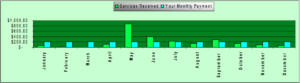
Are you frustrated by varying costs throughout the year? Sky-rocket costs one month, close to nothing the next month? Do you fear that there will be a big payment sometime during the year that you weren’t expecting? Are there times of the year that you have less room in your budget? With Budget Billing, instead of making all your expenses due at the time services are rendered, it allows you to pay incrementally throughout the year so that it fits well with your budget.

Example of a customer’s yearly landscape expenses:

Budget Billing

Most of your landscape expenses are accrued during only half of the year when re-mulching, lawn fertilization, trimming and mowing occur. During the other half of the year, in the Winter months, expenses are minimal, involving only snow removal and perhaps some Winter Displays or the Vibrant Winter Package. It can be a strain on your budget to pay the majority of your expenses during a fraction of the year. With Budget Billing, you can customize the allocation of your landscaping payments throughout the span of 12 months. This offers you the chance to plan your budget around a set payment.

Budget Billing:
(12 Payment Plan)

Budget Billing -12 Payment Plan

For example, most customers accrue 70% of their costs during only four months of the year, while the other 30% is spread out over the other eight months. With Budget Billing (see above graph), you could spread that 70% out over the other 8 months as well and only end up paying 8.3% of the entire yearly expenses per month. Or you could choose to allocate your expenses into four bigger payments of 25% each, payable at times of the year when you have more room in your budget. We want to make your payments as convenient as possible for you.

Budget Billing:

  • Incremental payments
  • Consistent costs
  • No interest

Budget Billing Table

Questions about Budget Billing? Call us! Phone: 260.627.8342

Identification and Treatment of Common Pest and Disease Problems in the Residential Lawn

Being able to identify common pest and disease problems is an important part of maintaining a healthy and visually appealing lawn. In order to identify common pest and disease problems in the residential lawn, it is important to be able to identify what type of turf grass mix your lawn contains. The three most common types of grasses used in the northern part of the United States are Kentucky Bluegrass, Perennial Ryegrass and Tall Fescue, which is often mixed with Bluegrass and Perennial Ryegrass. When you have identified which type of grass you have, you can more readily identify which disease your lawn may be infested with, since each variety tends to have its own diseases and pests.

Lawn Diseases

Affecting all 3 types of Grasses

Gray Snow Mold

Symptom: This mold commonly has a gray, gel-like appearance. Spots are approximately 12” in diameter.
Time: Late winter, early spring
Damage: Mats down the grass; if severe enough, it will leave a brown, dead spot.
Cause: Often the result of poor late-season mowing practices, because long grass in the winter harbors this disease
Treatment: Grass should be cut to proper length before it goes into dormancy in northern climates. This is the easiest and most economical way to prevent this disease, but it can also be prevented using a preventive systemic lawn fungicide.

picture unavailable

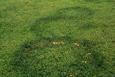
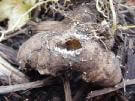
Fairy Ring

Symptom: Mushrooms growing in a circular band on the lawn in the spring and summer. Diameter can be from 1- 12’. Within the band, the grass is darker green than the rest of the lawn
Damage: Unsightly, and can kill the grass within the band
Treatment: Fertilize the lawn well and kick the mushrooms down

Fairy Ring

Fairy Ring
Department of Crop &
Soil
Sciences at Penn State


Affecting Cool Season Grasses

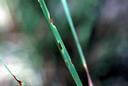
Leaf Spot

Symptom: Prominent black oval spots on the blade of grass
Time: Shows up in early May and late August
Damage: Thinning of the turf over several years if not treated
Cause: Associated with high humidity and low mowing heights (1.5” or less)
Treatment: Can be prevented by following good lawn-cultural practices. This means mowing at a height of 2.5 – 3 inches and irrigating during the early morning hours, from 5:30 to 10:30 A.M.

Leaf Spot

Leaf Spot
Plant Disease Diagnostic
Lab at Kansas State


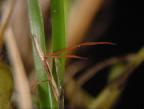
Red Thread

Symptom: Can be identified by its fuzzy pinkish red threads and is usually found in patches less than 12” in diameter
Time: Most commonly found in the spring and in the fall months
Damage: If severe enough, could kill the grass
Cause: Often a result of long grass, improper fertilization and water- soaked lawns
Treatment: Can be prevented by mowing at proper heights, implementing a sound fertilization program and by proper irrigation.

Red Thread

Bag Worm
Department of Entomology
at Purdue University


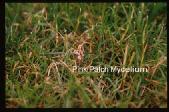
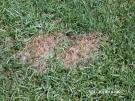
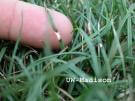
Pink Patch

Symptom: Very similar to Red Thread but lacking the fuzzy threads. It simply appears as a pink circle.
Time: Spring.
Treatment: Can be prevented using the same practices used to prevent Red Thread (see above)

Pink Patch

Pink Patch


Fusarium Blight (also affecting Bluegrass and Perennial Ryegrasses)

Time: Summer
Damage: If not treated, will eventually kill the infected spot of turf
Cause: Common in lawns that are compacted or have heavy thatch (decomposed grass matter). The disease begins small but begins to spread when daytime temperatures are 90◦ F and when nighttime temperatures are above 70◦ F.
Treatment: Proper irrigation and fertilization are the main ways to prevent this disease.

picture unavailable

Pythium Blight

Symptom: Cotton-like substance on a slimy, matted turf
Time: Summer
Damage: Mats down the grass and could eventually kill it
Cause: Excessive fertilization and excessive moisture. It is also commonly seen when daytime temperatures are between 80 – 95◦ F and when nighttime temperatures are above 70◦ F for three consecutive nights.
Treatment: Can be prevented by implementing a sound fertilization program and by proper irrigation

Pythium Blight

Pythium Blight
Department of Plant
Pathology
at the University of
Wisconsin – Madison


Affecting Kentucky Bluegrass

Dollar Spot

Symptom: Shows itself as a spot in the lawn about the size of a silver dollar in late May to early June. With closer inspection of the grass blade, a reddish-brown hourglass-shaped spot can be seen.
Damage: Will eventually kill the affected area of turf
Cause: Often the result of excessive thatch and poor fertility
Treatment: Excessive thatch and poor fertility can be prevented by proper fertilization, which involves applying enough nitrogen to give the lawn a green vigorous appearance, without applying too much.

Dollar Spot

Dollar Spot
Department of Plant
Pathology
at the University of
Wisconsin – Madison


Rust (also affects other types of lawns)

Symptom: Can be identified by its rust colored spots that easily rub off
Time: It often shows itself in the late summer in dry conditions
Damage: Not really seen as a major problem other than the inconvenience of turning a home owner’s shoes orange when walking through the lawn
Cause: Warm days, cool nights and slow drying of the lawn
Treatment: For prevention, mow frequently and properly. If the rust is severe, implement a systematic fungicide, as well as catch and discard grass clippings when you mow.

Rust

Rust
Plant Disease Diagnostic
Lab at Kansas State


Lawn Pests

Identifying common lawn pests is just as important as identifying common lawn diseases. Pests fall into two major groups: Insects and Weeds.

Insects

The five major insects that effect lawn turf are Japanese Beetles, the Northern Masked Chafer, May Beetles, Sod Webworms and Army Worms.

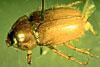
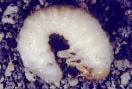
Japanese Beetles, Masked Chafers and May Beetles. The larvae or grubs of these insects eat through the root crown of the grass. Dead patches of grass will appear, and patches can easily be pulled up in chunks. The grubs are usually visible under the removed turf. Often skunks and raccoons will damage lawn turf searching for grubs as a food source. Damage from May beetles is commonly seen in mid-summer whereas Japanese Beetle and Masked Chafer damage is commonly seen in late summer into fall.

insects

Northern Masked Chafer
Center for Urban Ecology & Sustainability at theUniversity of Minnesota

Grub

Grub
Copyright © 2005
Purdue University


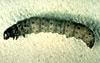
Sod Webworm (larva of lawn moths)

Symptom: Roughly three-quarters of an inch long and having stiff hairs running along its body. This insect typically affects Bluegrass species.
Time: Mid-May and at the end of August
Damage: Chews through the root crown of grass and spins silk-like webs in the thatch, possibly resulting in death of large sections of the lawn

Sod Webworm

Sod Webworm
The University of 
Minnesota
Extension Service


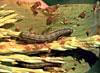
Army Worm

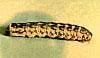
Symptom: Roughly 1.5 inches long, green and has several strips on its side. Skeletonized grass blades
Time: Spring
Damage: Unlike the other insects, this worm actually eats the blade of the grass instead of its root system. Although it’s not usually a major problem, if severe enough, it can cause death of patches of the lawn.

Army Worm Damage

Army Worm Damage
Copyright © 2005
Purdue University


Weeds

Weeds are the second lawn pest. Did you know that a weed is defined as any plant that is unwanted in a certain area? For example, a corn stalk would be considered a weed if it were growing in the middle of your lawn and turf grass would be considered a weed if it were growing in a corn field. Weeds in lawn fall into three main groups: Grassy weeds, Annual Broadleaf weeds and Perennial Broadleaf weeds.

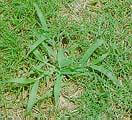
Grassy weeds include Crabgrass and Annual Bluegrass. Crabgrass can be identified by its flat crab-like appearance whereas Annual Bluegrass can be identified by its boat-shaped tip and its ability to produce seed heads even when mowed at heights less than one inch. Both of these grassy weeds are annuals, meaning that they complete their lifecycle within one growing season. The best control for these weeds is an application of a granular pre-emergent herbicide in late-winter or early spring.

Crabgrass

Crabgrass
University of Florida
Environmental
Horticulture Department


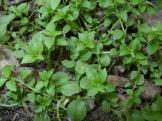
Annual broadleaf weeds are another common group of lawn weeds. This group includes Black Medic, Yellow Woodsorrel and Common Chickweed. Black Medic can be identified by its trifoliate leaves (containing three leaves), its clover-like appearance and its small yellow flowers. Yellow Woodsorrel is also trifoliate, but the leaflets are heart-shaped and have yellow trumpet-like flowers. Finally, the Common Chickweed can be identified by its shiny leaves, hairy stem and its small, white five-petal flowers. These weeds can be controlled easily by using any common selective Broadleaf Herbicide or by hand pulling.

Common Chickweed

Common Chickweed
Plant Pathology
Extension
of Iowa State University


Perennial Broadleaf weeds include Mouse Ear Chickweed, Canada Thistle, Plantains and Dandelions. These weeds are considered perennials because they live longer than one growing season and can reproduce multiple types.

Mouse Ear Chickweed is a low-growing weed that reproduces by creeping roots. It can be identified by its hairy stem and leaves as well as by its small, white flowers. This weed can be easily controlled by hand pulling because of its shallow root system, but chemical means are preferred.

picture unavailable

Canada Thistle is a very common weed in the lawn and landscape. It can be identified by its light-green, notched and slightly spiny leaves. This weed is one of the most difficult to eliminate due to its large horizontal root system. It is recommended that you use only chemical means to control this weed, because hand pulling usually does not remove the whole root system, which results in the growth of two weeds in the same location as the previous weed.

picture unavailable

Plantains can be identified by their low growing habit (form) and strongly ribbed leaves. The greatest characteristic by which they can be identified, however, is their flower that is borne on a long flower stalk in mid-summer.

picture unavailable

The Dandelion is probably the most common weed found in the residential lawn. It can be identified by its low growing habit, large tap root and, of course, its bright yellow flower seen typically in the spring. This weed seems to be the most hated weed by most homeowners due to its ability to reproduce quickly and abundantly. The best way to control this weed is to apply a selective Broadleaf Herbicide in the fall; hand pulling is not recommended due to the Dandelion’s large tap root.

picture unavailable

Identification and Treatment of Pests in Trees and Shrubs

Tent Caterpillars

Symptom: Silken tent on the end of branches visible
Time: End of June to the end of August
Damage: Complete defoliation of a branch. The silken tent looks unsightly.
Treatment: Prune and destroy all affected branches. If spraying with Insecticide, make sure to spray in the LATE evening when the Caterpillars are out of the nest, otherwise, the Insecticide will never reach them.
Plants Affected: Locust, Hawthorn, Apples and many other Shade trees.

Eastern Tent Caterpillar

Eastern Tent
Caterpillar
The Bugwood Network
& Forestry Images


Army Worm

Symptom: Worms feeding together in groups on your plants.
Time: May
Damage: Partial defoliation
Treatment: Birds are a very good control for the Army Worm.

Army Worm

Army Worm
Center for Urban Ecology
& Sustainability at the
University of Minnesota


Black Vine Weevil

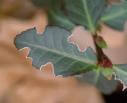
Symptom: Needles of Yews have moon-shaped holes cut out of their edges
Time: Spring or summer
Damage: None, except a little yellowing
Treatment: Parasitic Nematodes (can be sprayed on when watering)
Plants Affected: Yews

Black Vine Weevil


Bag Worm

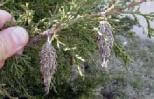
Symptom: Brown, shaggy bags (1.5-2.5”) hanging from branches.
Time: Late Summer
Damage: Partial defoliation
Treatment: Pick off the bag by hand. If spraying Insecticide, do it in the late afternoon when insects are feeding.
Plants Affected: Evergreens and Woody Ornamentals

Bag Worm

Bag Worm
Department of Entomology
at Purdue University


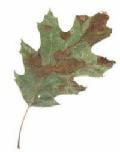
Canker Worm

Symptom: Large sections of young leaves eaten away, leaving only the midribs & veins.
Time: Noticeable in early May.
Damage: While unsightly, no permanent damage occurs
Treatment: Parasitic wasps will normally keep populations down. Also, use a General-purpose Insecticide.
Plants Affected: Apples, Oaks, Lindens and Beeches

Picture Unavailable

Cut Worm

Symptom: These little fellows eat off your newly transplanted plant at ground level, leaving the top of the plant lying there on the ground.
Time: Early spring (beginning of June)
Damage: Plant death
Treatment: General-purpose Insecticide. Cultivate the soil in the fall to expose the larva at the top of the soil to allow birds to eat them.
Plants Affected: Mostly newly planted annuals

Cut Worm

Cut Worm
Center for Urban Ecology
& Sustainability at the
University of Minnesota


Flat Head Borer

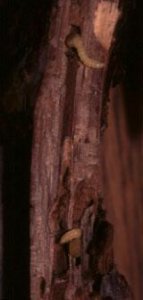
Symptom: Sawdust at base of tree with sap running from holes in the tree
Time: Late spring
Damage: Tree death if they bore tunnels in the bark all around the tree, thus cutting off nutrient transport from the roots to the rest of the tree.
Treatment: Maintain vigor in the trees to encourage healthy growth (good fertilization, moisture control, etc.); avoid mechanical damage from things such as string trimmers or mowers. Determine the direction of the borer’s tunnel by sticking a wire in it, then cut out the damaged area of the bark with a knife. Cut it out early before girdling occurs.
Plants Affected: Many shade trees

Flat Head Borer


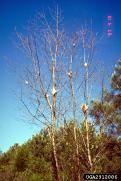
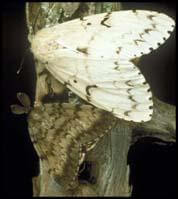
Gypsy Moth

Symptom: Large section of the tree or shrub stripped bare
Time: Summer
Damage: Defoliation. If this happens three years in a row, plant death
occurs.
Treatment: Biological control such as Pheromone traps or beneficial insect (nematodes) may help, although there is no really good control for these. Effective Insecticide: Sevin.
Plants Affected: Shade trees and Ornamental shrubs

Gypsy Moth

Gypsy Moth


Iris Borer

Symptom: Rotting of Iris Roots observable from the surface, as the roots lie right on ground). Yellowing and death of leaves
Time: Late summer
Damage: Plant death
Treatment: Dig up and destroy infected rhizomes (roots). When you plant new ones, dust the root areas with sulfur. Don’t mulch over rhizome (bulb), and don’t let a bunch of leaves and grasses grow around it will also control Aphid Populations.

Iris Borer Damage

Iris Borer Damage
Purdue Extension


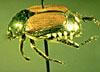
Japanese Beetle

Symptom: Surface of leaves completely eaten away, leaving only a netted appearance.
Time: June
Damage: Defoliation. No permanent damage.
Treatment: Biological or systematic spraying during the infestation period.
Plants Affected: Roses and Lindens among many other Ornamentals and Trees

Japanese Beetle

Japanese Beetle
Center for Urban Ecology
& Sustainability at the
University of Minnesota


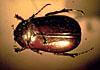
May or June Beetle

Symptom: White grubs in flower or shrub beds
Time: Early spring or late fall
Damage: Defoliation, although not as bad as that caused by Japanese Beetles. The damage done to the roots by the grubs is much greater than that done by the beetle itself.
Treatment: Biological or systematic spraying during the infestation period.
Plants Affected: Water with Biologicals or Insecticides to control grubs.

June Beetle

June Beetle
Center for Urban Ecology
& Sustainability at the
University of Minnesota


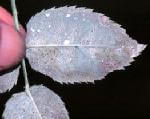
Lace Bugs

Symptom: Specked yellow blotches on leaves
Time: Mid-spring to early summer
Damage: Unsightly, but no real damage
Treatment: Maintain the vigor of the plant. If infestation is heavy, spray with generic Insecticide in mid-May.
Plants Affected: Azaleas, Rhododendrons and many other Ornamental Shrubs and Trees

Lace Bug

Symptom of Lace Bug
University of Florida,
Institute of Food &
Agricultural Sciences
Extension


Leaf Miners

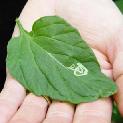
Symptom: Like the Flat Head Borer in bark, the Leaf Miner tunnels between the upper and lower surfaces of a leaf. The outline of their tunnels is visible on the leaf.
Time: Spring and summer
Damage: Unsightly
Treatment: Biologicals and systemic Insecticides
Plants Affected: Birch and many Perennials

Leaf Miner

Leaf Miner
Dr. Richard G. Snyder,
Professor & Vegetable
Specialist
Mississippi State

University Truck
Crops Experiment
Station


Mites (Spidermites)

Symptom: Mottled yellow webs visible in the early morning.
Time: Springtime, when temperatures rise above freezing, until the fall frost.
Damage: If severe enough, plant death
Treatment: Dormant oils and Sulfur Plants
Affected: Many Shrubs and Evergreens

Spidermite damage

Spidermite damage
Baldo Villegas


Scale Insects

Symptom: Visible on stems and leaves
Time: Hatched in early spring
Damage: Kills plants by sucking the nutrients out.
Treatment: Easiest to control by spraying dormant oil before leaves appear (either late winter or early spring)
Plants Affected: Euonymus, Dogwoods and many others

Scale Insects

Symptom of Scale
Insects
Baldo Villegas


Slugs & Snails

Symptom: Large holes eaten in leaves
Damage: Unsightly
Treatment: Slug bate or beer traps
Plants Affected: Hostas and many tender perennials

Slugs & Snails

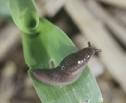
Slug
Copyright © 2005
Purdue University


Spittle Bug

Symptom: Appearance of spit-like bubbles on leaves and stems.
Time: Anytime in the summer
Damage: Unsightly, but no real damage occurs
Treatment: Beneficial Insects or Generalpurpose Insecticides.
Plants Affected: Many Perennials and Flowering Shrubs. The Bean Family.

picture unavailable

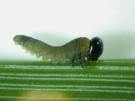
European Saw Fly

Symptom: Sections of the plant will seem to suddenly move (2-3,000 worms have been seen on one plant, and they are startled by your movements, thus the “moving bush”). Branches will be completely stripped
Time: Usually in the second week of May.
Damage: Complete defoliation of an entire bush can happen in less than two days!
Treatment: General-purpose Insecticide
Plants Affected: Evergreens, especially the Mugho Pine

European Saw Fly

European Saw Fly
Penn State Extension


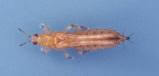
Thrips

Symptom: Flowers turn yellow and then turn brown where petals join the stem.
Time: Anytime the flowers are blooming
Damage: No damage occurs to the plant, but the flowers lose their
beauty
Treatment: General-purpose Insecticide; natural predators such as Lace Wings will also control Thrip populations.

Western Flower Thrip

Western Flower Thrip
Dr. Ken MacDonald


Aphids

Symptom: Insects visible on soft tissue and stems or on the underside of leaves. Ne`w growth will curl.
Time: Anytime throughout the growing season (early spring, late summer).
Damage: Unsightly, but no real damage
Treatment: Spray in dormant season with oil. Most mild Insecticides will
control Aphids. Predator insects, such as Lady Bugs and Lace Wings will also control Aphid Populations.
Plants Affected: Most

picture unavailable

Identification and Treatment of Diseases in Trees and Shrubs

Sooty Mold

Symptom: Only visible symptom is a black material covering the leaves.
Time: Summer
Damage: The black sooty look is actually caused by insects sucking on the leaves, leaving a Honeydew mold in its place. While the mold causes no permanent damage to the plant, it may not be pleasing to the eye.
Treatment: Control Aphid (insect) populations with a mild insecticide.

Sooty Mold

Sooty Mold
Baldo Villegas


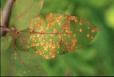
Leaf Spot

Symptom: Spots on the leaves material
Time: Anytime throughout the year
Damage: Complete defoliation and if severe enough, plant death
Treatment: Improve air circulation, water in the early morning, and increase soil exposure by cultivating and turning over the soil.
Plants Affected: Most

Leaf Spot

Leaf Spot
Copyright © 2005
Purdue University


Rust

Symptom: Pale spot on leaves. Orange pustules (blisters) on underside of the leaf.
Time: Anytime throughout the year
Damage: Although not pleasant to look at, it causes no damage to your plants.
Treatment: Other than making sure your plants get good air circulation, control of this problem is normally not necessary.

Rust

Rust
Plant Disease Diagnostic
Lab at Kansas State


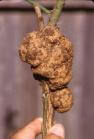
Crown Gall

Symptom: Galls (tumors) on the stems
Time: Anytime throughout the year
Damage: Can kill your plants if severe enough
Treatment: Catch as early as possible. Prune out the infected area, making sure to sterilize your tools between each cut.
Plants Affected: Euonymus

Crown Gall

Crown Gall
Baldo Villegas


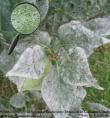
Powdery Mildew

Symptom: White powdery coating on the upper surfaces of leaves
Damage: Partial defoliation
Treatment: Since stressed plants are more susceptible to disease, make sure to water and fertilize and to prune properly for improved air circulation.

Powdery Mildew

Powdery Mildew
Plant Disease Diagnostic
Lab at Kansas State


Anthracnose

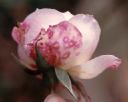
Symptom: Rotting spots on leaves, stems or flowers
Time: Very early in a cool, wet spring.
Damage: Partial defoliation, rarely causing severe damage.
Treatment: Clean up plant debris. Spraying Copper Sulphate right when the leaves start to emerge will help.

Anthracnose

Anthracnose
Copyright © 2005
Purdue University


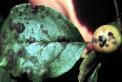
Apple Scab

Symptom: Light gray spots on sepals (little leaf-like structures directly under the flower) or on the underside of the leaf. Spots on the fruit become corky.
Time: Infection occurs in the early spring but becomes obvious mid- to late-summer.
Damage: Partial defoliation; only the new growth retains the leaves.
Treatment: Make sure to plant disease-resistant varieties. Prune well to increase air circulation.
Plants Affected: Apple Trees, Hawthorns, Pear Trees

Apple Scab

Apple Scab
The University of Minnesota
Extension Service


Black Spot

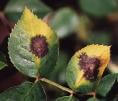
Symptom: Yellow spots on leaves turning brown and eventually black
Time: Summer.
Damage: Complete defoliation, resulting in the death of individual canes (stalks).
Treatment: Pick up all plant debris, cut out and destroy all infected parts of the plant (any debris left on the ground houses the spores throughout the winter, leaving them to return for more damage the next year). Avoid watering the leaves. A sulfur based fungicide will help control this problem.
Plants Affected: Rose Family

Black Spot

Black Spot
Baldo Villegas


Botrytis Blight

Symptom: Tiny, water-soaked spots appear. Then the spots enlarge and become soft and watery. Eventually, the infected stems turn light brown and crack open. Damage normally starts on the lower part of the plant.
Time: Early spring
Damage: The branches die back and if severe enough, the plant will die completely.
Treatment: Improve air circulation, clean up all old plant debris, and remove and destroy all diseased portions of the plant (again, the spores reside in the debris over winter).

Botrytis Blight

Botrytis Blight
Baldo Villegas


Canker

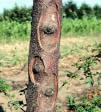
Symptom: Long, sunken section of the branch or stem.
Time: Anytime throughout the year
Damage: Death of all branches eventually leading to the death of the entire
plant
Treatment: Cut out the infected areas at least 2 inches below the infected area, sterilizing the
tools between each cut.
Plants Affected: Dogwoods, Maples, Spruces, Mountain Ash, Poplars and Willows

Canker

Canker
The University of Minnesota
Extension Service


Fire Blight

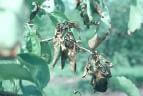
Symptom: Sudden wilting of leaves, flowers, and even young stems. Leaves turn brown or black and curl upright. The branch looks as if scorched by fire.
Time: Anytime throughout the year
Damage: IMPORTANT!!! Your tree or shrub could die in as little as 2-3 days!
Treatment: Avoid over-fertilizing with nitrogen. Control insects as much as possible. Prune out and destroy all infected areas, disinfecting tools between each cut.
Plants Affected: Roses, Pyracantha, Apples and Pears.

Fire Blight

Fire Blight
Copyright © 2005
Purdue University


Fusarium Wilt

Symptom: Wilting, even when soil is moist.
Time: Anytime of the year when there are moist, cool evenings
Damage: If severe enough, could kill the plant
Treatment: Plant in well-drained soil. Because high soil temperatures aggravate the problem, mulch wherever possible, since mulch decreases the temperature of the soil.
Plants Affected: Many plants including Bulbs, Shrubs and Trees.

Image not Available

Note: Although each of these diseases is different, you can greatly reduce the risk of disease for most of your plants simply by pruning to increase air circulation.

Congratulations on your new Annual Flowers!!!

Annual flower n. Flowers that have to be planted every year, because they are not suited to the cold weather. –also called “annual”

Now that you’ve invested the money for the installation of your annuals, here are some tips for you to enhance the beauty of your plants:

Watering:

  • Rule of Thumb:
    – annuals in ground, water once every 2 or 3 days
    – annuals in pots, water everyday
  • Water plants on the root zone rather than on the foliage; in other words, hold watering wand below the leaves
  • As you become more familiar with your annuals, you will notice that after some time, the plants will begin to wilt and turn a gray, dull color. This is the ideal time to water. These signs can replace the Rule of Thumb above.

CAUTION: Do NOT let the plant stay wilted. This will damage flower production, and the exquisite color of the flowers is what your annuals are all about!!


Fertilization:

With your annuals, Paragon has already placed a slow-release fertilizer that will help your plants bloom for the next 5 months. However, you will see a greater increase in flower production if you

  • Water once a week with fertilizer

NOTE: Paragon prefers Bloom Boost, but any fertilization product that you get at your local garden center, hardware store or nursery will work. Simply ask for a bloom-enhancing fertilizer. Some examples are Miracle Grow, Scotts, and Fertilome.

Pruning:

  • Pinch off the dead flower heads after they are finished flowering

NOTE: This is not critical to the success of the plant, especially for Impatiens and Petunias. However, it will increase flowering, as well as make the plant look neater. (For customers who request our service, we do this once a week.)

  • Pinch off all dead, yellow, or sick-looking leaves where the leaf meets the stem

(Rotting leaves can harbor fungi, which can damage flower production.)

  • If your annuals begin to get out of bounds, do not be afraid to prune them hard. It will set them back for perhaps a week but will actually increase flowering 2 to 3 weeks down the road.
  • After flowers are finished in the fall (after the frost), foliage should be trimmed to the ground.

Fall Maintenance:

NOTE: To extend the seasonal color deep into the fall, annuals can be replaced with mums.

  • Tropical plants can be brought indoors through the winter. They should be potted, placed in a sunny room and cared for similarly to houseplants.
  • Pots should be brought indoors to keep them from cracking. Paragon offers the service of storing your pots over the winter.

NOTE: Your pots are a big investment; take care of them.

If you have questions about your landscape, please call us at 260- 627-8342.

ENJOY your flowers!!!

BULB SALE

I know it seems early, but Fall is actually the best time to order spring bulbs to insure availability of your favorites. It has been said that planting Spring bulbs is like making a contract with the future. Perhaps this seems like a sales gimmick, but I have found that thought to be very profound. If you are going to spend money on something for which you will receive no return for 6 months, it had better be good. Yet my wife and I buy into the fever every fall. We invest in “just a few more,” and anxiously anticipate the arrival of Spring. There is something about the promise embodied in fragile green fronds gingerly poking their way through a February snow bank that connects with the human spirit. Hope springs eternal. Life breaks forth. And it lifts my spirits in the dreariest weather of the year to see that hint of what is to come.

Having become captivated by the thrill of it, I want to share it with you. We have access to large quantities of professional grade flower bulbs. We can often buy, deliver and plant these premium bulbs for less than you can purchase normal size bulbs in the usual garden catalogs.

TULIPS: These popular flowers seem to be everyone’s favorites. But, there are two downsides you should be aware of. First, deer and squirrels love them. Squirrels occasionally take the bulbs and run. Deer eat the flowers as they appear. Secondly, in our tight clay soils, tulips grow smaller each year providing less flowering as time goes by. We treat them as annuals in high visibility places and remove them to plant summer flowers when they have finished blooming. You can expect the flowering to decrease by approximately 1/3 each year in less visible areas. In spite of these two risks, they are still a favorite and worthy of a place in your garden.

Standard Tulips: Cost of $1.10 per each planted (minimum of 25).

Tulips come in 3 bloom times: Early, Mid, and Late. Mid = most impact.

Early: Comes in white, yellow, orange, red, deep pink, soft pink, and lavender.
Mid: Choose from same colors as Early, plus apricot and purple.
Late: Choose from the same colors as Early, plus purple.

Specialty Tulips: Cost of $1.25 per each planted (minimum of 25).

Water Lily Flowered Mix: Flared Petals.
Rembrandt or Parrot Mix: Flamed or feathered color.
Peony Flowered Mix: Peony shaped flowers.

DAFFODILS: Although not as varied in color, these hardy flowers are not bothered by deer or squirrels. They actually thrive in our soils and expand to form large clumps over the years. Daffodils come in yellow, white, gold, and white with yellow cups and have bloom times of Early and Late. Most early daffodils are yellow and most late daffodils are white.

Daffodils: Cost of $1.10 per each planted (minimum of 25).
Naturalizing Mix: Cost of $0.90 per each planted (minimum of 250).

HYACINTHS: My wife loves their fragrance. I was skeptical about them, but have become a hearty proponent of them as they have proven to be very hardy. We have found a supplier that sells truly professional sized bulbs. Most I have seen are 6 to 8 inches tall, while ours have consistently been 10 to 12 inches tall and very full. They weaken with age, but ours are still quite strong at 5 years old. Consider me a believer. These professional grade Hyacinths come in white, pink, blue, lavender and purple.

Hyacinths (Professional Grade): Cost of $1.70 per each (minimum of 25).

OTHER BULBS: The following bulbs are the BEST OF THE REST, and most will naturalize themselves. My personal favorites are Chionidoxa, although you need a lot of them to get the effect, and the Grecian Wind Flower.

Chionidoxa or Glory of the Snow: $0.25 per each planted (minimum of 100).
Grecian Wind Flower: $0.25 per each planted (minimum of 100).
Muscari or Grape Hyacinth: $0.25 per each planted (minimum of 100).
Snowdrops or Galanthus: $0.25 per each planted (minimum of 100).
Wood Hyacinth: $1.00 per each planted (minimum of 100).

If you are interested in Spring bulbs, please call Michelle to place your order at 260-627-8342.

(Total Minimum Order of $100.00. If you are a regular mowing customer, or if you sign-up for a Fall clean-up, there is no minimum order required.)

Core Aeration and Overseeding

This is the time of the year to again consider Core Aeration and Overseeding. These are two of the best ways to improve the overall health and appearance of your lawn.

A stronger root system with more nutrient storage capacity translates into a greener and healthier lawn.

Core Aeration is the process of removing small plugs of soil and thatch from the lawn area. Two important reasons for regular Core Aeration are Thatch decomposition, and Soil compaction relief.

1. Thatch decomposition. Thatch is the decaying area of material between the soil, and the green part of your grass. Some thatch area is normal and good; however 12 ” or more is not. It hinders light, water, air, and vital nutrients from getting deeper to the root area of your turf. Some problems created by excess thatch are shallow root development, increased susceptibility to disease and insect related problems, more frequent need for water, and less tolerance to heat and drought.

Core Aeration, promotes the break down of the thatch layer.

2. Soil compaction relief. Compaction is the natural process of settling that occurs in soil. This is a particular problem when soil is clay based, as it generally is in our area. When soil is compacted, water runs off the top more easily, air and nutrients are unable to reach into the soil as deeply, and it is a difficult environment for turf roots to expand and strengthen.

Root development is enhanced due to the fall being the time of the year when your turf is establishing a more vigorous root system. The holes created through Core Aeration allow turf roots to more easily expand during this stage of root development.

Overseeding is simply the spreading of new seed over the lawn area after Core Aerating.

1. As the plugs of soil on the lawns surface break down, they come in contact with, and protect the new seed.

2. Other seed finds a safe place in the empty plugholes, and in a few weeks, you have new grass establishing itself in your turf area.

Core Aeration and Overseeding

This is the time of the year to again consider Core Aeration and Overseeding. These are two of the best ways to improve the overall health and appearance of your lawn.

A stronger root system with more nutrient storage capacity translates into a greener and healthier lawn.

Core Aeration is the process of removing small plugs of soil and thatch from the lawn area. Two important reasons for regular Core Aeration are Thatch decomposition, and Soil compaction relief.

1. Thatch decomposition. Thatch is the decaying area of material between the soil, and the green part of your grass. Some thatch area is normal and good; however 12” or more is not. It hinders light, water, air, and vital nutrients from getting deeper to the root area of your turf. Some problems created by excess thatch are shallow root development, increased susceptibility to disease and insect related problems, more frequent need for water, and less tolerance to heat and drought.

Core Aeration, promotes the break down of the thatch layer.

2. Soil compaction relief. Compaction is the natural process of settling that occurs in soil. This is a particular problem when soil is clay based, as it generally is in our area. When soil is compacted, water runs off the top more easily, air and nutrients are unable to reach into the soil as deeply, and it is a difficult environment for turf roots to expand and strengthen.

Root development is enhanced due to the fall being the time of the year when your turf is establishing a more vigorous root system. The holes created through Core Aeration allow turf roots to more easily expand during this stage of root development.

Overseeding is simply the spreading of new seed over the lawn area after Core Aerating.

1. As the plugs of soil on the lawns surface break down, they come in contact with, and protect the new seed.

2. Other seed finds a safe place in the empty plugholes, and in a few weeks, you have new grass establishing itself in your turf area.